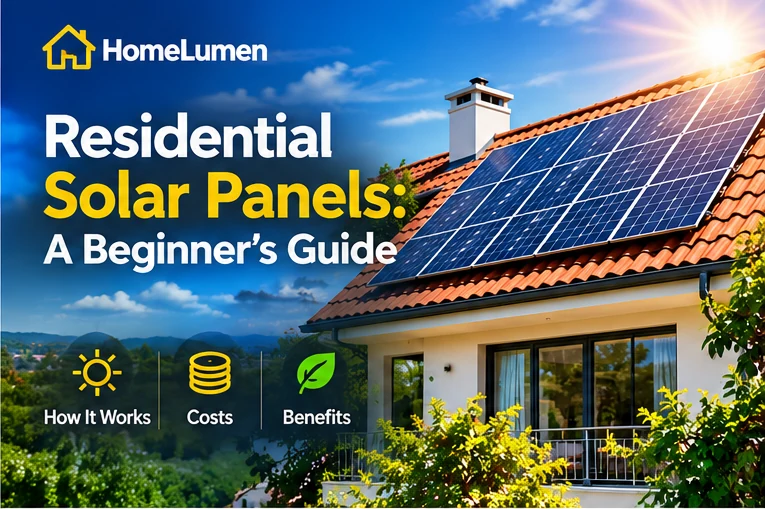
Residential Solar Panels: A Complete Beginner’s Guide
Residential solar panels allow a household to generate some of its own electricity from sunlight. Whether a system is suitable depends on roof condition, shading, electricity use, local tariffs, grid rules, installation quality and financing. This guide explains the main components and questions to ask before requesting proposals.
How Solar Panels Work
Most home systems use photovoltaic (PV) modules. Solar cells convert sunlight into direct-current (DC) electricity. An inverter converts that electricity into alternating current (AC), which is used by most household circuits and appliances.
A typical installation includes PV modules, an inverter, mounting equipment, electrical protection, monitoring and, depending on the design, a grid connection or battery. Production changes with sunlight, weather, shading, orientation, temperature and system design. Rated capacity is not the same as the energy generated over a day or year.
Is Your Home Suitable?
Roof condition
The roof should be structurally suitable and in good condition. If major repairs or replacement are likely soon, address them before installing panels. Removing and reinstalling an array later can add cost.
Sunlight and shading
Trees, nearby buildings, chimneys and roof structures can shade modules. Ask installers how they assessed shading throughout the day and across seasons.
Roof area and orientation
Usable area depends on roof geometry, access, setbacks, structural constraints and local rules. Preferred orientation and tilt depend on location; advice for one latitude or hemisphere should not be copied blindly to another.
Electricity consumption
Collect bills for a full year if possible. Note monthly kWh, tariff structure and planned changes such as an electric vehicle or heat pump. System sizing should reflect realistic use rather than an arbitrary panel count.
Main Types of Solar Systems
Grid-connected
A grid-connected system works alongside the utility network. Solar electricity supplies household loads when available; the grid supplies the shortfall. Exporting excess electricity and receiving compensation depend on local utility rules.
Most conventional grid-tied inverters shut down during a grid outage for safety. Do not assume rooftop panels will power the home during a blackout.
Hybrid with battery storage
A hybrid system combines solar generation, a battery and a grid connection. Depending on its design, it may store excess energy for later use and provide backup to selected circuits. Backup capability depends on the inverter, battery, wiring and configured loads.
Off-grid
An off-grid system has no utility connection. It must be designed around consumption, seasonal solar resource, battery capacity and periods of low generation. Careful sizing is essential because there is no grid supply to cover a prolonged shortfall.
Do You Need a Battery?
A battery stores electricity for later use. It may increase the amount of solar energy used after sunset, support selected backup loads or help manage time-based tariffs.
Its value depends on the difference between import and export prices, evening consumption, outage needs, usable capacity, power rating, efficiency, warranty and replacement cost. Do not choose a battery based only on headline capacity. Ask for usable energy, continuous and peak power, warranty terms and which circuits it can support.
Compare proposals with and without storage using the same assumptions. A battery is not automatically the most economical option.
How to Size a System
A qualified designer should consider local solar-resource data, shading, roof conditions, equipment specifications and household consumption. Annual electricity use is a starting point, not a complete sizing calculation.
Ask the installer to show estimated monthly and annual production, assumptions about shading and system losses, expected self-consumption, grid imports and exports, and how future demand was considered. Treat production estimates as estimates unless a contract clearly defines a performance commitment.
The National Renewable Energy Laboratory’s solar data and tools can provide useful technical context, but a site-specific design is still necessary.
Compare Installer Quotes
Obtain multiple written proposals with comparable designs. A low headline price may exclude permits, structural work, electrical upgrades or important equipment.
Check:
- System capacity and module quantity.
- Panel and inverter manufacturers and models.
- Battery model and usable capacity, if included.
- Mounting equipment and roof attachment method.
- Estimated production and calculation assumptions.
- Monitoring and communications requirements.
- Permits, inspections and grid-connection responsibilities.
- Installation schedule, payment milestones and exclusions.
- Workmanship warranty and after-sales support.
Verify licensing, insurance and relevant experience under local rules. Ask who performs the work and who handles faults. See the U.S. Department of Energy guide to choosing a solar installer.
Understand the Financial Case
Include purchase and installation costs, financing, permits, grid fees, expected production, self-consumption, export compensation, maintenance, replacement assumptions, taxes and incentives.
A simple payback estimate divides net upfront cost by estimated annual bill savings. It is only a first screening tool: it does not fully account for financing, tariff changes, degradation, replacements or the time value of money. Ask for the assumptions behind every savings or payback claim.
Incentives, export arrangements and taxes vary by country and can change. Confirm current terms with the relevant utility or government authority rather than relying only on marketing material.
Permits, Installation and Grid Connection
Depending on location, approvals may include building permits, electrical inspections, utility interconnection and export agreements. Confirm who is responsible for each step and when the system may be switched on.
Keep the final design, equipment manuals, warranties, inspection records, commissioning documents and emergency shutdown instructions.
Maintenance and Monitoring
Review monitoring data for unexpected changes, check inverter alerts, prevent new shading from vegetation and follow manufacturer cleaning guidance. Arrange professional inspection if damage or electrical faults are suspected.
Do not climb onto a roof or open electrical equipment without appropriate training and safety precautions. Cleaning frequency depends on local dust, rainfall, access and manufacturer instructions.
Common Buying Mistakes
- Choosing by panel count rather than system design and expected production.
- Ignoring roof repairs that may be needed soon.
- Assuming a standard grid-tied system provides outage backup.
- Overlooking local export compensation rules.
- Accepting savings claims without checking assumptions.
- Ignoring warranties, service and replacement costs.
Solar Project Checklist
Before signing, confirm that you reviewed a year of bills, assessed roof condition and shading, compared written proposals, checked installer qualifications, understood equipment warranties, reviewed permits and grid rules, compared battery and non-battery options, and received written production assumptions.
Frequently Asked Questions
Do panels work on cloudy days?
They can generate electricity in diffuse light, but output is generally lower than under strong direct sunlight. The amount depends on cloud cover, technology and location.
Will solar power my home during a blackout?
Not necessarily. Conventional grid-tied systems normally shut down during outages. Backup requires suitable equipment and system design.
Are batteries essential?
No. A grid-connected system can operate without a battery where local rules permit. Storage should be evaluated against tariffs, usage and backup needs.
How long does installation take?
The physical work may be relatively short, but surveys, permits, delivery, inspection and utility approval can extend the overall project. Timing varies.
Can I install a system myself?
Solar work involves structural, electrical and grid-safety considerations. Follow local rules and use qualified professionals where required.
Conclusion
A successful residential solar project begins with accurate information about the property, energy use and local rules. Compare complete proposals, understand battery and backup limitations, and check the installer carefully. For related planning, see our guides to reducing electricity bills and smart home energy efficiency.